Trending...
- Governor Polis Requests Major Presidential Disaster Declaration to Unlock Federal Support for Southwestern Colorado Flood Recovery
- Strengthening Colorado's Financial Future: Governor Polis Unveils Final Balanced Budget, Protects Historic Investments in Education and Issues Coloradans Care About, Makes Medicaid More Sustainable
- City Council invites community engagement: Volunteer for Colorado Springs Boards, Commissions, and Committees
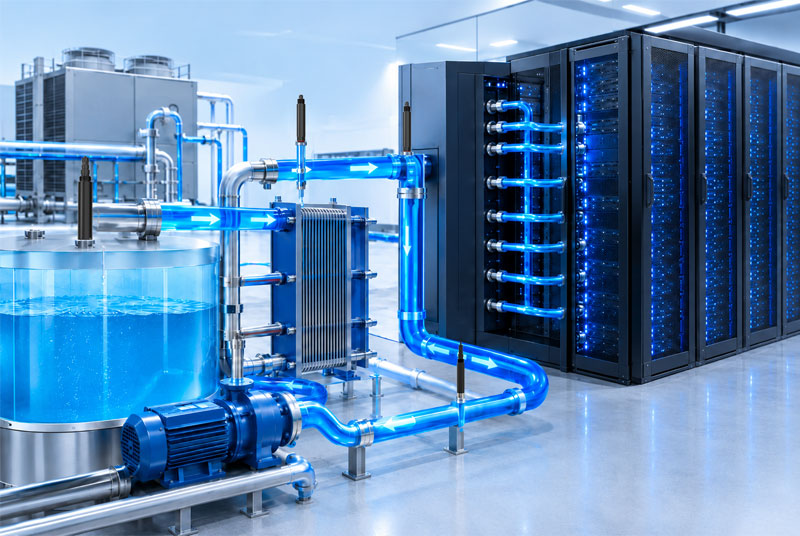
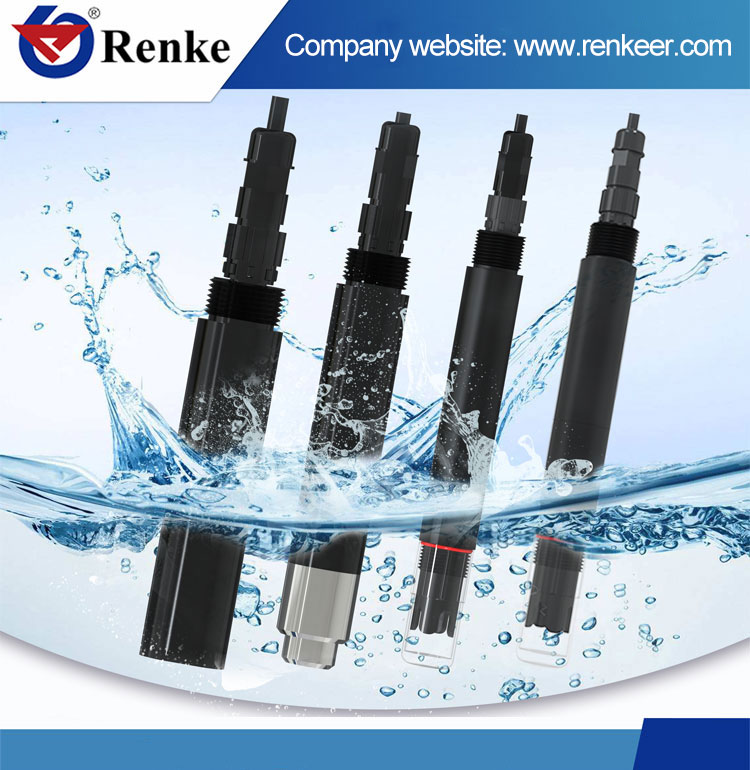
Renkeer water quality sensors deliver continuous monitoring of key coolant parameters in AI data centers, assisting operators in identifying fluid abnormalities and maintaining system efficiency.
JINAN, China - ColoradoDesk -- As artificial intelligence workloads increase thermal demands on data centers, liquid cooling is becoming an important approach to managing heat generated by high-performance computing equipment. Renkeer, a provider of water quality monitoring solutions, supports this trend by supplying water quality sensors that help maintain the efficient operation of AI liquid cooling systems.
Coolant loops in AI data centers typically include narrow microchannel cold plates, pumps, manifolds, fittings and heat exchangers made from several different metals. Even small shifts in water quality can cause problems in this environment. Rising conductivity may signal ion contamination or coolant degradation, which increases corrosion and leakage risk. A drifting pH value can accelerate metal attack or point to depleted inhibitors. Dissolved oxygen promotes corrosion in copper and steel parts. Suspended particles can clog microchannels and reduce flow. Because a single cooling failure can idle expensive GPU clusters, continuous measurement is more dependable than periodic manual sampling.
More on Colorado Desk
Renkeer's water quality range includes pH sensors, conductivity sensors, dissolved oxygen sensors, turbidity sensors and ORP sensors. Together they measure acidity, ionic content, oxygen level, particle load and oxidation-reduction potential, the main indicators used to judge the condition of process water and coolant. The sensors are built for continuous online use and can be connected to industrial controllers and IoT monitoring platforms.
Continuous readings allow operators to set alarm thresholds, follow trends over time and schedule maintenance such as filter changes, coolant top-ups and system flushes based on actual condition instead of fixed intervals. This reduces manual sampling work, shortens response time when water quality drifts and supports longer service life for pumps, heat exchangers and cold plates. Data from several loops, including primary loops, secondary loops and associated chillers and cooling towers, can be gathered on one monitoring platform, giving facility teams a clear view of the whole cooling system.
More on Colorado Desk
When deploying water quality monitoring equipment in liquid cooling systems, sensor selection is crucial. Direct chip cooling, immersion cooling, and traditional water cooling loops use different cooling media and have varying material compatibility standards. Operators must verify the sensor contact materials, measurement range, and calibration performance for the target cooling medium and interpret sensor measurements in conjunction with equipment specifications, maintenance records, and other relevant operational data.
Through its water quality monitoring solutions, Renkeer aims to support data-driven management of water-based cooling applications. As data center operators expand infrastructure to meet growing AI computing demands, reliable measurement of relevant coolant parameters can contribute to more informed maintenance decisions, improved visibility into operating conditions, and effective cooling system management.
Coolant loops in AI data centers typically include narrow microchannel cold plates, pumps, manifolds, fittings and heat exchangers made from several different metals. Even small shifts in water quality can cause problems in this environment. Rising conductivity may signal ion contamination or coolant degradation, which increases corrosion and leakage risk. A drifting pH value can accelerate metal attack or point to depleted inhibitors. Dissolved oxygen promotes corrosion in copper and steel parts. Suspended particles can clog microchannels and reduce flow. Because a single cooling failure can idle expensive GPU clusters, continuous measurement is more dependable than periodic manual sampling.
More on Colorado Desk
- Colorado Springs: Mayor Yemi celebrates seven emerging leaders at 2026 Mayor's Young Leader Awards
- Technical Brief Examines Enterprise Integration Challenges as AI Agent Platforms Expand
- Colorado: Governor Polis Releases Statement on Fatal Agent-Involved Shooting in Lakewood
- OncoBeta Introduces Rhenium-SCT for Non-Melanoma Skin Cancer at Theageneio Cancer Hospital of Thessaloniki
- Brian G. Miller Co., LLC Receives Tier 1 Ranking in the 2027 Edition of Best Law Firms®
Renkeer's water quality range includes pH sensors, conductivity sensors, dissolved oxygen sensors, turbidity sensors and ORP sensors. Together they measure acidity, ionic content, oxygen level, particle load and oxidation-reduction potential, the main indicators used to judge the condition of process water and coolant. The sensors are built for continuous online use and can be connected to industrial controllers and IoT monitoring platforms.
Continuous readings allow operators to set alarm thresholds, follow trends over time and schedule maintenance such as filter changes, coolant top-ups and system flushes based on actual condition instead of fixed intervals. This reduces manual sampling work, shortens response time when water quality drifts and supports longer service life for pumps, heat exchangers and cold plates. Data from several loops, including primary loops, secondary loops and associated chillers and cooling towers, can be gathered on one monitoring platform, giving facility teams a clear view of the whole cooling system.
More on Colorado Desk
- The Villari Firm, PLLC Named to the 2027 Edition of Best Law Firms
- Colorado: Governor Polis and the Division of Criminal Justice Release New Crime Report: Violent and Property Crime Rates Drop 17% in First Half of 2026
- Colorado: CDHE's Career Connected Campus Designation Recognizes Institutions That Prepare Students for the Workforce
- Colorado: Governor Polis Celebrates Approval of Prop NN and 7A Ballot Measure
- Bacchus Wine & Spirits and Michelin Guide–Recommended Ethel's Fancy to Host Exclusive LOUIS XIII Limited Edition Diwali Decanter Celebration
When deploying water quality monitoring equipment in liquid cooling systems, sensor selection is crucial. Direct chip cooling, immersion cooling, and traditional water cooling loops use different cooling media and have varying material compatibility standards. Operators must verify the sensor contact materials, measurement range, and calibration performance for the target cooling medium and interpret sensor measurements in conjunction with equipment specifications, maintenance records, and other relevant operational data.
Through its water quality monitoring solutions, Renkeer aims to support data-driven management of water-based cooling applications. As data center operators expand infrastructure to meet growing AI computing demands, reliable measurement of relevant coolant parameters can contribute to more informed maintenance decisions, improved visibility into operating conditions, and effective cooling system management.
Source: Shandong Renke Control Technology Co., Ltd.
0 Comments
Latest on Colorado Desk
- Colorado: Governor Polis Congratulates Winners of Statewide Races
- Governor Polis Congratulates Phil Weiser as Colorado's 44th Governor
- Heritage at Hopewell Announces New 3.875% Year-One Mortgage Rate Buydown Incentive on Quick Delivery Townhomes (7.11% APR)
- New TROP2 Research Breakthrough Strengthens REQORSA® Gene Therapy Story as Roche Collaboration Advances Precision Lung Cancer Treatment: Genprex, Inc
- DualRail Launches with First Customer, a Local Burrito Chain in Dublin, Ireland
- Rent a Truck or Hire Movers? New Data Shows Fuel Now Makes Up to 40% of DIY Moving Costs
- Colorado Springs: City welcomes independent review of data center policies by Romer Institute
- Colorado Springs: 8th Street improvements: Overnight lane closures on Fountain Creek bridge Nov. 3
- Colorado Springs: City invites residents to help shape housing and neighborhood investments
- Colorado Springs Airport Monthly Update – September 2026
- Colorado: Governor Polis Appoints Victoria M. Cisneros to the Jefferson County Court in the 1st Judicial District
- Colorado: Make Your Voice Heard! Governor Polis Thanks Election Day Workers and Reminds Coloradans to Vote
- Club Wyndham Research Identifies the "Holiday Rewind Effect": 93% of Parents Recreate Their Own Childhood Holidays for Their Kids
- Governor Polis Provides Update on Southwestern Colorado Flooding, State Response, and Voting Access on Election Day
- IEI Rugged IP66 Panel PC Brings Real-Time Visibility to Heavy-Duty Mining Fleets
- FDA Approval; Major Milestone for Preservative-Free Ketamine Ahead of FDA Goal Date for Treatment of Suicidal Depression by NRx Pharmaceuticals, Inc
- Building a Technology Powerhouse-From AI Drones and Global Acquisitions to Defense, Enterprise Software and the Future of Autonomous Operations $ZENA
- Shelter Structures America backs MATRA Second Life Project to turn retired tent vinyl into homes for displaced families
- Boulder SEO Marketing Founder Chris Raulf to Speak at Business Today's 52nd International Conference
- P-Wave Press Announces Becoming Dad: Reflections for New Fathers by L. A. Davenport