Trending...
- Registered Nurse Launches Healthcare Wealth Strategy Practice for Healthcare Professionals - 161
- Homeowner Prep Announces Strategic Language Shift: Replacing "Renters" with "Future Homeowners" to Inspire Wealth-Building Mindsets
- Governor Jared Polis Hands Out 3 Millionth Book with Colorado Department of Early Childhood Highlighting the Imagination Library of Colorado's Statewide Impact
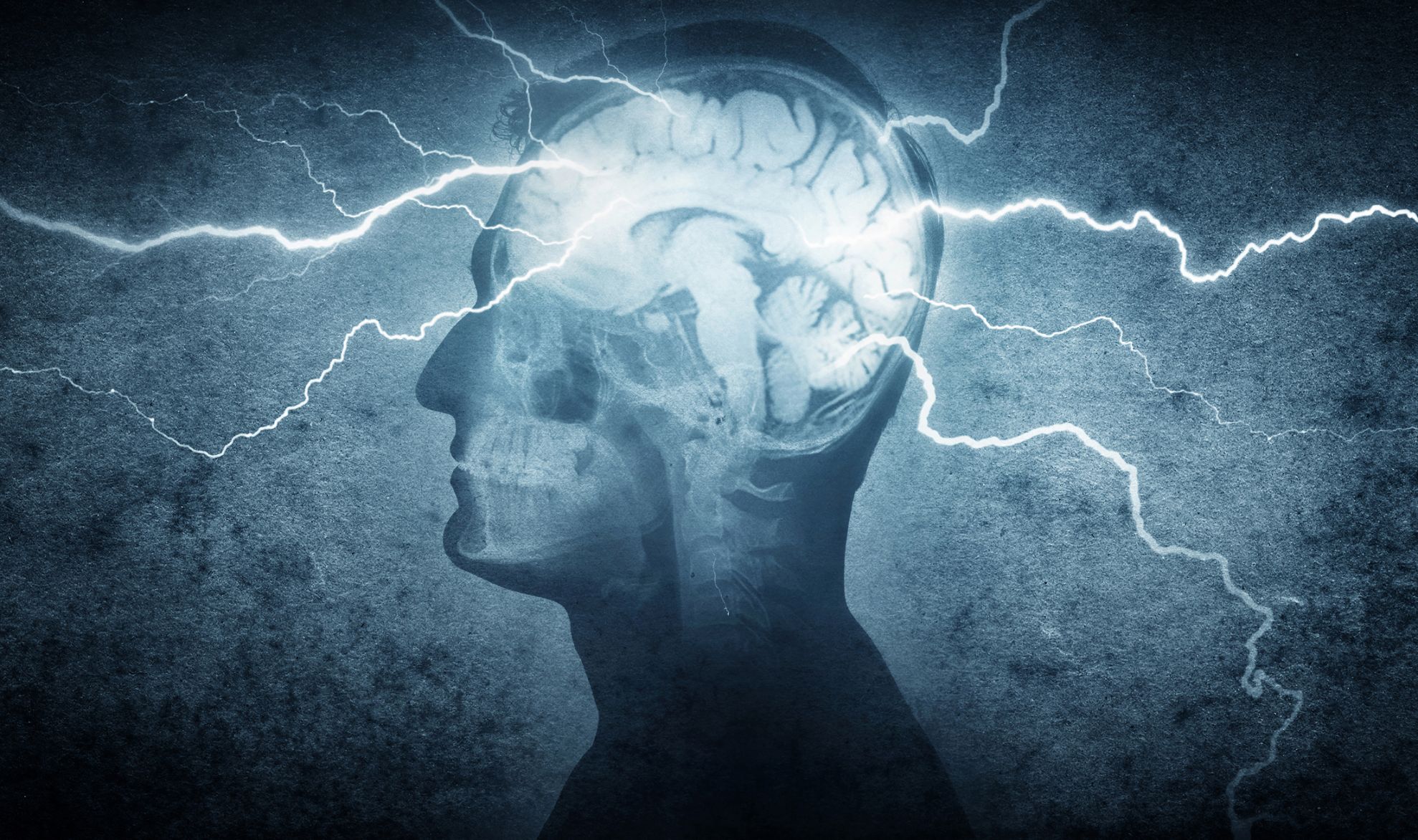
A national coalition of health and human rights organizations, attorneys, medical experts, and electroconvulsive therapy (ECT) survivors says the U.S. Food and Drug Administration's 2018 ECT rule is scientifically indefensible and places vulnerable Americans at risk.
LOS ANGELES - ColoradoDesk -- By CCHR International
The newly formed Stop ECT Coalition, representing hundreds of thousands of individuals, has launched a nationwide campaign urging review of the Food and Drug Administration (FDA)'s 2018 rule on electroconvulsive therapy (ECT) devices. Citizens Commission on Human Rights International (CCHR) is among the organizations supporting the initiative, along with the Global Wellness Forum and Stand for Health Freedom.
ECT delivers up to 460 volts of electricity through the brain to induce a grand mal seizure—yet psychiatrists concede that they do not know how the procedure "works." More than 80 years after its introduction, neither safety nor efficacy has been scientifically proven.
ECT devices were "grandfathered" into FDA regulation as Class III high-risk devices in 1976, bypassing modern requirements for Premarket Approval (PMA), which mandates clinical trials proving safety and effectiveness (SE). In 2018, the FDA down-classified ECT devices to moderate risk (Class II) for certain psychiatric indications, without knowing manufacturers had refused for decades to produce the necessary studies for a PMA and had no intention of doing so.
"The incorrect classification allowed ECT devices to be used on children as young as five, pregnant women, seniors, veterans, and other vulnerable persons," the Coalition states. "Involuntary use—which still occurs in some U.S. facilities—has been condemned by the United Nations and the World Health Organization as a human-rights abuse."
The UN Committee Against Torture has explicitly stated that involuntary ECT can constitute torture. Despite the FDA claiming that involuntary ECT in the U.S. is uncommon and requires court review in every state, legal analysis shows 33 states have no explicit ECT codes, and six states have no ECT laws at all.
More on Colorado Desk
Under 21 U.S.C. § 360f (Section 516 of the Federal Food, Drug, and Cosmetic Act), the FDA has authority to ban devices that pose an "unreasonable and substantial risk" of injury. The Coalition argues ECT clearly meets that standard, pointing to decades of documented neurological injury, memory loss, cognitive deficits, and deaths.
Although the FDA's rule applies only to a few indications in patients aged 13 and older, psychiatrists can prescribe ECT off-label for any disorder. The American Psychiatric Association (APA) even advocates ECT for children younger than 13.[1]
During its 2009–2010 review, the FDA relied on only 68 studies out of more than 1,160 relevant papers, excluding research documenting neurological injury. Of more than 3,000 public comments, 79% opposed lowering the device's risk classification.[2] The agency asserted that warning labels and informed consent would mitigate risk. Those labels include the warnings: "ECT device use may be associated with disorientation, confusion, and memory problems," and "The long-term safety and effectiveness of ECT treatment has not been demonstrated."[3]
At the FDA's 2011 public hearing, a senior academic declared that ECT would remain on the market regardless of evidence.[4] Days earlier, Dr. Matthew Rudorfer of the National Institute of Mental Health told The New York Times that manufacturers viewed required clinical trials as "too expensive."[5]
ECT's mechanism requires electrical current to disrupt brain function and trigger a generalized seizure. The FDA acknowledges other including burns, fractures, dental injury, prolonged seizures, cardiovascular complications, stroke, and death. "When the mechanism itself causes injury, disclosure cannot prevent it," said Jan Eastgate, president of CCHR International. "Consent forms document what was said—but cannot transform a destructive mechanism into a therapeutic one."
Whether Class II or Class III, the device's electrical output is identical. This raises fundamental contradictions: how can the same current be "moderate risk" for depression but "high risk" for other disorders? What biological mechanism allows electricity to differentiate between diagnoses? Experts call this regulatory fiction, not science.
Attorney Jonathan Emord wrote in his Citizen Petition: "The FDA has utterly ignored clear-cut evidence of brain damage, memory loss, and death resulting from ECT. ECT is barbaric and should be removed from the market." Supporting expert findings include Professor John Read, who concluded ECT offers no long-term benefit over placebo and can cause brain damage[6]; biomedical engineer Dr. Ken Castleman reporting that electrical current becomes heat as it passes through the brain, causing cell dysfunction or death; a 2018 California case in which a jury could reasonably conclude ECT causes brain damage, led a manufacturer to add warnings of "permanent brain damage"; and the Nebraska Supreme Court (2025) accepted testimony that ECT causes persistent or permanent memory loss and brain damage in up to 55% of recipients.[7]
More on Colorado Desk
International bodies have long condemned ECT use on minors. In 2005, the World Health Organization stated: "There are no indications for the use of ECT on minors; this should be prohibited through legislation." U.S. bans include California (1976) and Texas (1993). Western Australia prohibits ECT under age 14, while the Australian Capital Territory bans it under age 12. Yet the FDA dismissed the relevance of these bans.
The Stop ECT Coalition and CCHR urge the new FDA Commissioner and lawmakers to act where the agency has failed. Vulnerable Americans—including children, pregnant women, seniors, veterans, and involuntary patients—deserve protection from a device whose harms are intrinsic and irremediable. Visit StopECT.com to learn more and take action. Watch CCHR's documentary Therapy or Torture: The Truth About Electroshock.
Sources:
[1] Resource Document on the FDA Final Order to Reclassify ECT Devices, APA Feb. 2019
[2] emord.com/blawg/wp-content/uploads/2016/08/1-ECT-Citizen-Petition.pdf
[3] www.federalregister.gov/documents/2018/12/26/2018-27809/neurological-devices-reclassification-of-electroconvulsive-therapy-devices-effective-date-of
[4] wayback.archive-it.org/7993/20170114044023/http://www.fda.gov/downloads/AdvisoryCommittees/CommitteesMeetingMaterials/MedicalDevices/MedicalDevicesAdvisoryCommittee/NeurologicalDevicesPanel/UCM247595.pdf, pp. 435-436
[5] Duff Wilson, "F.D.A. Is Studying the Risk of Electroshock Devices," The New York Times, 23 Jan 2011, www.nytimes.com/2011/01/24/business/24shock.html
[6] www.bmj.com/content/364/bmj.k5233; www.dailymail.co.uk/news/article-6738197/Controversial-electric-shock-treatment-severe-depression-cause-permanent-brain-damage.html
[7] www.ctbar.org/docs/default-source/publications/connecticut-lawyer/ctl-vol-30/4-march-april-20/ctl-marapr-20—treatment-without-consent-cases.pdf
The newly formed Stop ECT Coalition, representing hundreds of thousands of individuals, has launched a nationwide campaign urging review of the Food and Drug Administration (FDA)'s 2018 rule on electroconvulsive therapy (ECT) devices. Citizens Commission on Human Rights International (CCHR) is among the organizations supporting the initiative, along with the Global Wellness Forum and Stand for Health Freedom.
ECT delivers up to 460 volts of electricity through the brain to induce a grand mal seizure—yet psychiatrists concede that they do not know how the procedure "works." More than 80 years after its introduction, neither safety nor efficacy has been scientifically proven.
ECT devices were "grandfathered" into FDA regulation as Class III high-risk devices in 1976, bypassing modern requirements for Premarket Approval (PMA), which mandates clinical trials proving safety and effectiveness (SE). In 2018, the FDA down-classified ECT devices to moderate risk (Class II) for certain psychiatric indications, without knowing manufacturers had refused for decades to produce the necessary studies for a PMA and had no intention of doing so.
"The incorrect classification allowed ECT devices to be used on children as young as five, pregnant women, seniors, veterans, and other vulnerable persons," the Coalition states. "Involuntary use—which still occurs in some U.S. facilities—has been condemned by the United Nations and the World Health Organization as a human-rights abuse."
The UN Committee Against Torture has explicitly stated that involuntary ECT can constitute torture. Despite the FDA claiming that involuntary ECT in the U.S. is uncommon and requires court review in every state, legal analysis shows 33 states have no explicit ECT codes, and six states have no ECT laws at all.
More on Colorado Desk
- UK Financial Ltd Chooses PUMP.FUN App to Launch Maya Meme's Minor-League Meme Coins and Announces Lifetime Airdrop Program
- Boston Industrial Solutions Expands Its Industry-Leading UV Ink Portfolio with the Launch of a Matte Ink - Natron® UVPZ
- Century Fasteners Corp. Exhibiting at 2026 MRO Americas Show – April 21-23, 2026 – Booth #2257
- Colorado Announces Proposal to Annex Northern New Mexico, Protecting State From Texas Aggression
- Blue Sparrow Coffee named Best Matcha in Westword's Best of Denver 2026
Under 21 U.S.C. § 360f (Section 516 of the Federal Food, Drug, and Cosmetic Act), the FDA has authority to ban devices that pose an "unreasonable and substantial risk" of injury. The Coalition argues ECT clearly meets that standard, pointing to decades of documented neurological injury, memory loss, cognitive deficits, and deaths.
Although the FDA's rule applies only to a few indications in patients aged 13 and older, psychiatrists can prescribe ECT off-label for any disorder. The American Psychiatric Association (APA) even advocates ECT for children younger than 13.[1]
During its 2009–2010 review, the FDA relied on only 68 studies out of more than 1,160 relevant papers, excluding research documenting neurological injury. Of more than 3,000 public comments, 79% opposed lowering the device's risk classification.[2] The agency asserted that warning labels and informed consent would mitigate risk. Those labels include the warnings: "ECT device use may be associated with disorientation, confusion, and memory problems," and "The long-term safety and effectiveness of ECT treatment has not been demonstrated."[3]
At the FDA's 2011 public hearing, a senior academic declared that ECT would remain on the market regardless of evidence.[4] Days earlier, Dr. Matthew Rudorfer of the National Institute of Mental Health told The New York Times that manufacturers viewed required clinical trials as "too expensive."[5]
ECT's mechanism requires electrical current to disrupt brain function and trigger a generalized seizure. The FDA acknowledges other including burns, fractures, dental injury, prolonged seizures, cardiovascular complications, stroke, and death. "When the mechanism itself causes injury, disclosure cannot prevent it," said Jan Eastgate, president of CCHR International. "Consent forms document what was said—but cannot transform a destructive mechanism into a therapeutic one."
Whether Class II or Class III, the device's electrical output is identical. This raises fundamental contradictions: how can the same current be "moderate risk" for depression but "high risk" for other disorders? What biological mechanism allows electricity to differentiate between diagnoses? Experts call this regulatory fiction, not science.
Attorney Jonathan Emord wrote in his Citizen Petition: "The FDA has utterly ignored clear-cut evidence of brain damage, memory loss, and death resulting from ECT. ECT is barbaric and should be removed from the market." Supporting expert findings include Professor John Read, who concluded ECT offers no long-term benefit over placebo and can cause brain damage[6]; biomedical engineer Dr. Ken Castleman reporting that electrical current becomes heat as it passes through the brain, causing cell dysfunction or death; a 2018 California case in which a jury could reasonably conclude ECT causes brain damage, led a manufacturer to add warnings of "permanent brain damage"; and the Nebraska Supreme Court (2025) accepted testimony that ECT causes persistent or permanent memory loss and brain damage in up to 55% of recipients.[7]
More on Colorado Desk
- Ocean County College Introduces Pathways to Simplify the Student Journey and Strengthen Career Connections
- Kiko Nation Expands to Apple App Store, Achieving Full Mobile Deployment for Livestock Digital Registry Platform
- The Lawyers' Marketer Launches Claude AI Implementation Service for Law Firms
- Certified Trading Card Association and Collectors MD Launch Healthy Hobby Initiative
- Colorado Springs: The next wildfire is coming. Be Ready. Set. Go
International bodies have long condemned ECT use on minors. In 2005, the World Health Organization stated: "There are no indications for the use of ECT on minors; this should be prohibited through legislation." U.S. bans include California (1976) and Texas (1993). Western Australia prohibits ECT under age 14, while the Australian Capital Territory bans it under age 12. Yet the FDA dismissed the relevance of these bans.
The Stop ECT Coalition and CCHR urge the new FDA Commissioner and lawmakers to act where the agency has failed. Vulnerable Americans—including children, pregnant women, seniors, veterans, and involuntary patients—deserve protection from a device whose harms are intrinsic and irremediable. Visit StopECT.com to learn more and take action. Watch CCHR's documentary Therapy or Torture: The Truth About Electroshock.
Sources:
[1] Resource Document on the FDA Final Order to Reclassify ECT Devices, APA Feb. 2019
[2] emord.com/blawg/wp-content/uploads/2016/08/1-ECT-Citizen-Petition.pdf
[3] www.federalregister.gov/documents/2018/12/26/2018-27809/neurological-devices-reclassification-of-electroconvulsive-therapy-devices-effective-date-of
[4] wayback.archive-it.org/7993/20170114044023/http://www.fda.gov/downloads/AdvisoryCommittees/CommitteesMeetingMaterials/MedicalDevices/MedicalDevicesAdvisoryCommittee/NeurologicalDevicesPanel/UCM247595.pdf, pp. 435-436
[5] Duff Wilson, "F.D.A. Is Studying the Risk of Electroshock Devices," The New York Times, 23 Jan 2011, www.nytimes.com/2011/01/24/business/24shock.html
[6] www.bmj.com/content/364/bmj.k5233; www.dailymail.co.uk/news/article-6738197/Controversial-electric-shock-treatment-severe-depression-cause-permanent-brain-damage.html
[7] www.ctbar.org/docs/default-source/publications/connecticut-lawyer/ctl-vol-30/4-march-april-20/ctl-marapr-20—treatment-without-consent-cases.pdf
Source: Citizens Commission on Human Rights International
Filed Under: Health, Government
0 Comments
Latest on Colorado Desk
- Mom Creators Coalition Launches with WaterWipes® as Official Founding Sponsor
- Senior Legacy Transition Program Introduced by Denver Metro Realtor with RE/MAX Professionals
- PandaGuarantee Launches Rent Guarantor Service in New York City
- The $112M Marketing Lesson Joe Whyte Learned: Why 'More Traffic' Is the Biggest Lie in Digital Marketing
- Colorado: Protecting Public Safety: Governor Polis Signs Social Media Law to Support Law Enforcement and Enhance Safety
- Daniel Kaufman Expands Kaufman & Company Real Estate Platform With New Acquisitions, AI-Driven Industrial Development and Nationwide Growth Initiative
- Artemis Fine Arts and Arte Primitivo's debut collaborative auction was a huge success, totaling nearly $1.5 million
- purelyIV Launches Lab Testing Services in Metro Detroit
- Governor Polis Thanks Executive Director Kim Bimestefer's Service to the State of Colorado and Leadership in Health Care for Coloradans
- Colorado Apprenticeship Month 2026: Spread the Apprenticeship Effect
- On the 296th Anniversary of the Ceremony That Made His Ancestor Emperor, a Cherokee Descendant Publishes the Novel That Restores Him
- Colorado: Governor Polis Celebrates Significant Drop in Auto Theft in 2025
- Bokka Group Updates BuilderCX™ Platform Page, Setting a New Standard for Home Builder Customer Satisfaction Surveys
- NRx Pharmaceuticals Could Be on the Verge of a Breakout Year as AI, FDA Catalysts, and Mental Health Demand Converge
- Canyons & Chefs Launches New Page Dedicated to Private Chef Bachelor and Bachelorette Experiences Across Colorado
- Canyons and Chefs Launches New Page for Cannabis-Infused Private Chef Dining Across Colorado
- DC Accounting Firm Offers Free Business CRM to Small Business Clients Alongside Weekly Bookkeeping Model
- CCHR: Psychiatric Drugs Fuel Rising Death Toll: National Adverse Drug Event Awareness Day Confronts America's Medication Crisis
- Denver Apartment Finders Updates Its RiNo Page to Help Renters Navigate Denver's River North Market
- Explosive $10 Billion Counter-Drone Market with AI-Powered Defense Ecosystem: ZenaTech, Inc. (N A S D A Q: ZENA)