Trending...
- Sara Abbas Receives "Eniochos" Charioteer Award at 2026 Who is Who International Awards
- Colorado: Sons Gaming LLC Launches in Morgan County with Support from Rural Jump-Start
- Colorado Partners with Code for America to Simplify Tax Filing for Eligible Families
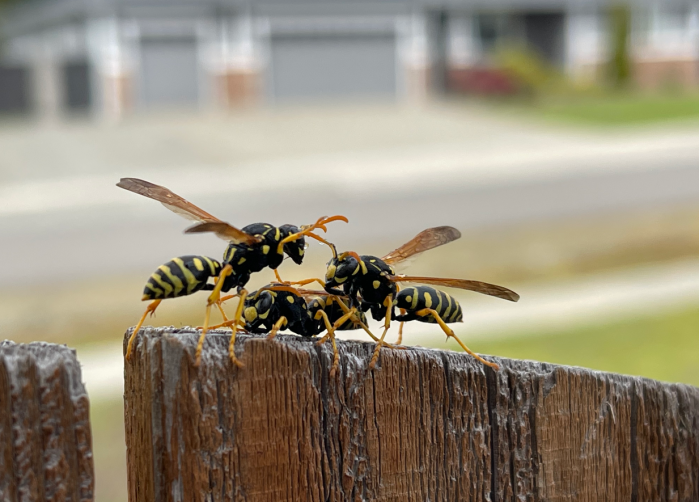

Forecasters expect a warmer-than-normal, drier-than-average summer across the Pacific Northwest, conditions that tend to grow wasp and yellowjacket colonies earlier and push them toward backyards, patios, and food. Interstate Pest Management, family-owned in the region since 1963, says a few simple steps in June and July can help families stay ahead of the season's late-summer peak.
OLYMPIA, Wash. - ColoradoDesk -- If you have been outside lately, you have probably noticed it already: this summer is shaping up warm and dry across the I-5 corridor. Forecasters at NOAA's Climate Prediction Center are leaning toward a warmer-than-normal summer for the Pacific Northwest, with below-average rainfall expected across much of the region. For most of us, that means more evenings on the deck and more weekends at the lake. For wasps and Yellowjackets, it means about the same thing it means for us: a longer, busier season outdoors.
We wanted to get ahead of it. Here is what a hot, dry summer tends to do to stinging insects in our area, and a few simple things you can do now to keep your backyard comfortable for the people in it.
Why warm, dry weather works in their favor
Stinging insects are weather-driven. When winters stay mild and spring warms up early, more queens survive to start nests, and those nests get a head start on the season. By the time most of us notice the activity, a colony has often had weeks of warm weather to grow.
Dry weather adds a second wrinkle. As summer wears on and natural food sources like nectar and soft fruit dry up, yellowjackets in particular start scavenging for protein and sugar wherever they can find it. That often means your grill, your picnic table, the kids' juice boxes, and the recycling bin. A warm, dry stretch can push that scavenging behavior earlier in the year and make it more noticeable than in a cooler, wetter season.
None of this is cause for alarm. It simply means the season may start a little sooner and run a little stronger than average, so a few small steps in June and July go a long way by August.
More on Colorado Desk
Who you are likely to see
Most of the stinging insects people call us about along the I-5 corridor fall into a few familiar groups:
Yellowjackets are behind the majority of stings. They are fast, black and yellow, often nest in the ground or in wall voids, and they are the boldest scavengers around food and drinks.
Paper wasps are longer-legged and build open, umbrella-shaped nests under eaves, railings, and play structures. They tend to be calmer unless their nest is bumped or disturbed.
Bald-faced hornets build the large gray, football-shaped paper nests you sometimes see in trees and shrubs (usually not more than 12 feet off the ground). They are very protective of that nest and are best admired from a distance.
A quick and important note: honey bees and bumble bees are not on that list. They are pollinators we want to protect, not pests. We do not treat them, and if you come across a honey bee swarm, the right move is a local beekeeper who can relocate it safely. If you are not sure what you are looking at, send us a photo and we will help you tell the difference.
Keeping your family safe this summer
The good news is that most stings are preventable with habits that cost nothing. Here is where we would start:
Cover food and sweet drinks outdoors, and glance into open cans before you take a sip. An unattended soda is a yellowjacket's favorite find.
Stay on top of water and food sources. Pick up fallen fruit, rinse recyclables, and keep trash and recycling lids closed. Dry summers concentrate insects around whatever water and food they can reach.
Do a calm walk-around early in the season. Check eaves, soffits, under decks and railings, dense shrubs, and any ground holes where you notice wasps coming and going. Small, early nests are far easier to handle than late-summer ones.
Do not swat, and do not seal a nest yourself. Swatting releases an alarm scent that calls in more wasps, and plugging a nest opening often just sends them looking for a new way out, sometimes into your wall or living space.
Dress simply for outdoor gatherings. Light colors and skipping heavy floral scents both help.
Teach kids to stay calm and walk away rather than flail. Quick, panicked movement is usually what turns a curious wasp into a defensive one.
More on Colorado Desk
If anyone in your home has a known stinging-insect allergy, keep their prescribed epinephrine on hand during outdoor activities, and let hosts and coaches know. A little planning makes summer a lot less stressful for everyone.
When it makes sense to call
Plenty of small nests in out-of-the-way corners can simply be left alone. The ones worth handling sooner are the nests near where your family actually lives: by a door, along a walkway, over a patio, near a play area, or tucked into a wall void you cannot safely reach. Ground nests in the lawn and large aerial nests up high are also better left to someone with the right equipment, because those are the situations where multiple stings tend to happen.
Wall voids are the one spot we want to flag specifically. A yellowjacket colony inside a wall keeps expanding, and it can chew through drywall from the inside. Brad, one of our family owners, says we get a call or two like this every year: a homeowner notices a soft, bulging spot on a wall, often about the size of a grapefruit, and presses on it to see what it is. The nest gives way, and instead of a few wasps, hundreds pour into the room. So if you ever find a spot like that, especially with a faint buzzing behind it or wasps slipping in and out near a baseboard or outlet, leave it alone and call us. That is exactly the kind of situation we would rather reach before it opens up.
There is no need to call the moment you spot a single wasp. But if a nest is growing somewhere your family passes every day, earlier is easier, calmer, and usually less expensive than waiting for the peak in late summer.
For homeowners who would rather not think about it at all, our All Seasons Pest plan includes quarterly visits timed to the Pacific Northwest season, with our team knocking down accessible wasp nests and treating common nesting spots before activity peaks.
We are right down the road
Interstate Pest Management has been a family-owned part of the Pacific Northwest since 1963, and our certified technicians live and work in the same neighborhoods you do, from Salem, Portland and Vancouver up through Kelso, and Olympia. If you spot a nest, are not sure what you are dealing with, or just want a second set of eyes before a backyard party, we are always glad to help.
Have a question, or want a technician to take a look? Visit interstatepest.com or give us a call at 1-888-844-4476. Here is to a warm, safe, and comfortable summer.
Interstate Pest Management - "The Best Solution Is Just Down The Road!"
We wanted to get ahead of it. Here is what a hot, dry summer tends to do to stinging insects in our area, and a few simple things you can do now to keep your backyard comfortable for the people in it.
Why warm, dry weather works in their favor
Stinging insects are weather-driven. When winters stay mild and spring warms up early, more queens survive to start nests, and those nests get a head start on the season. By the time most of us notice the activity, a colony has often had weeks of warm weather to grow.
Dry weather adds a second wrinkle. As summer wears on and natural food sources like nectar and soft fruit dry up, yellowjackets in particular start scavenging for protein and sugar wherever they can find it. That often means your grill, your picnic table, the kids' juice boxes, and the recycling bin. A warm, dry stretch can push that scavenging behavior earlier in the year and make it more noticeable than in a cooler, wetter season.
None of this is cause for alarm. It simply means the season may start a little sooner and run a little stronger than average, so a few small steps in June and July go a long way by August.
More on Colorado Desk
- Colorado: Governor Polis Verbally Declares Disaster Emergency In Response to Green Ridge Fire in Routt County
- Studica Robotics Supports Robotics Training Camp for WorldSkills Shanghai 2026
- Colorado Springs: City greenhouse opens gates for annual surplus plant sale July 23-25
- Lineus Medical Renews Agreement with Vizient, Delivering Enhanced Value for Vizient Members
- Qscription Technologies Appoints Radiology Industry Veteran Elliot Silverman to Advisory Board
Who you are likely to see
Most of the stinging insects people call us about along the I-5 corridor fall into a few familiar groups:
Yellowjackets are behind the majority of stings. They are fast, black and yellow, often nest in the ground or in wall voids, and they are the boldest scavengers around food and drinks.
Paper wasps are longer-legged and build open, umbrella-shaped nests under eaves, railings, and play structures. They tend to be calmer unless their nest is bumped or disturbed.
Bald-faced hornets build the large gray, football-shaped paper nests you sometimes see in trees and shrubs (usually not more than 12 feet off the ground). They are very protective of that nest and are best admired from a distance.
A quick and important note: honey bees and bumble bees are not on that list. They are pollinators we want to protect, not pests. We do not treat them, and if you come across a honey bee swarm, the right move is a local beekeeper who can relocate it safely. If you are not sure what you are looking at, send us a photo and we will help you tell the difference.
Keeping your family safe this summer
The good news is that most stings are preventable with habits that cost nothing. Here is where we would start:
Cover food and sweet drinks outdoors, and glance into open cans before you take a sip. An unattended soda is a yellowjacket's favorite find.
Stay on top of water and food sources. Pick up fallen fruit, rinse recyclables, and keep trash and recycling lids closed. Dry summers concentrate insects around whatever water and food they can reach.
Do a calm walk-around early in the season. Check eaves, soffits, under decks and railings, dense shrubs, and any ground holes where you notice wasps coming and going. Small, early nests are far easier to handle than late-summer ones.
Do not swat, and do not seal a nest yourself. Swatting releases an alarm scent that calls in more wasps, and plugging a nest opening often just sends them looking for a new way out, sometimes into your wall or living space.
Dress simply for outdoor gatherings. Light colors and skipping heavy floral scents both help.
Teach kids to stay calm and walk away rather than flail. Quick, panicked movement is usually what turns a curious wasp into a defensive one.
More on Colorado Desk
- Search Is Broken. Curated Discovery Is the Future
- 20 Ways to Save Money Running a Van
- How Fortress Law Group Turned a DUI Arrest in Ohio Into a Full Acquittal at Trial
- Who is behind deanne drake llc
- Breaking the Silence: Tour Sparks National Conversation on Men's Mental Health and Domestic Abuse
If anyone in your home has a known stinging-insect allergy, keep their prescribed epinephrine on hand during outdoor activities, and let hosts and coaches know. A little planning makes summer a lot less stressful for everyone.
When it makes sense to call
Plenty of small nests in out-of-the-way corners can simply be left alone. The ones worth handling sooner are the nests near where your family actually lives: by a door, along a walkway, over a patio, near a play area, or tucked into a wall void you cannot safely reach. Ground nests in the lawn and large aerial nests up high are also better left to someone with the right equipment, because those are the situations where multiple stings tend to happen.
Wall voids are the one spot we want to flag specifically. A yellowjacket colony inside a wall keeps expanding, and it can chew through drywall from the inside. Brad, one of our family owners, says we get a call or two like this every year: a homeowner notices a soft, bulging spot on a wall, often about the size of a grapefruit, and presses on it to see what it is. The nest gives way, and instead of a few wasps, hundreds pour into the room. So if you ever find a spot like that, especially with a faint buzzing behind it or wasps slipping in and out near a baseboard or outlet, leave it alone and call us. That is exactly the kind of situation we would rather reach before it opens up.
There is no need to call the moment you spot a single wasp. But if a nest is growing somewhere your family passes every day, earlier is easier, calmer, and usually less expensive than waiting for the peak in late summer.
For homeowners who would rather not think about it at all, our All Seasons Pest plan includes quarterly visits timed to the Pacific Northwest season, with our team knocking down accessible wasp nests and treating common nesting spots before activity peaks.
We are right down the road
Interstate Pest Management has been a family-owned part of the Pacific Northwest since 1963, and our certified technicians live and work in the same neighborhoods you do, from Salem, Portland and Vancouver up through Kelso, and Olympia. If you spot a nest, are not sure what you are dealing with, or just want a second set of eyes before a backyard party, we are always glad to help.
Have a question, or want a technician to take a look? Visit interstatepest.com or give us a call at 1-888-844-4476. Here is to a warm, safe, and comfortable summer.
Interstate Pest Management - "The Best Solution Is Just Down The Road!"
Source: Interstate Pest Management
0 Comments
Latest on Colorado Desk
- Colorado Partners with Code for America to Simplify Tax Filing for Eligible Families
- Sounds of LA County: 27 Parks.108 Concerts. One County
- Only One Flight Stands Between Los Angeles Youth Leaders and a Life-Saving Mission in South Africa
- Stigma Across Borders: Concerns Grow Over Discrimination Against Shincheonji Members Abroad
- Colorado: Governor Polis Verbally Declares Disaster Emergency In Response to Ferris Fire in Dolores and Montezuma Counties
- Governor Polis Appoints Kyle W. Brenton to the Colorado Court of Appeals and Dalia D. Labrador to the Arapahoe County Court in the 18th Judicial District
- Colorado Springs: Shop, swap and celebrate at Westside Community Center's Saleabration this Saturday
- Colorado's Venture Capital Authority Powers Growth for 26 Colorado Companies in 2025, Supporting 365 Jobs
- Colorado Springs: Motorcyclist dies after June 6 crash near Interstate 25 and Circle Drive
- World Cup Crowds Are a Stress Test for America's Restrooms
- Postmortem Pathology Expands Access to Private Autopsy Services in Las Vegas
- How Sacramento Families Are Using Private Autopsies to Protect Inheritances, Resolve Insurance Claims, and Find Closure
- Los Angeles' Best Food: Food Journal Magazine Examines the Trends Shaping the City's Dining Scene
- BeNXGen.ai Launches Candy Bag Fundraiser Program to Help Organizations Raise Funds
- Landmark Construction Expands Glass, Glazing, and Commercial Remodeling Services Across Los Angeles County and Surrounding Areas
- ENTOUCH Named Top 100 Inspiring Workplaces in North America for Third Consecutive Year
- TeachUNITED Announces Diego Adame as Chief Executive Officer
- Pulse Wave is where moments become movements
- Michigan's Plane Crash Data Points Away from Big Airports
- 2iG Solutions Launches MGA Insight, Bringing AI-Powered Business Intelligence to Managing General Agents