Trending...
- Colorado: Governor Polis Orders Flag to Fly at Half-Staff in Honor of Former Senator Ben Nighthorse Campbell on Day of Memorial
- Colorado Lt. Governor Dianne Primavera Announces Pueblo West Middle School Students Awarded Funding for STEM Rocketry Program Liberty Point International Middle School receives funding as part of the National Lieutenant Governors Association (NLGA) Lt. G
- YOKE Expands NIL Club Into Athlete-Led Commerce With Athlete Merch Launch
The platform offers a research-backed roadmap to transform underutilized properties into economic assets.
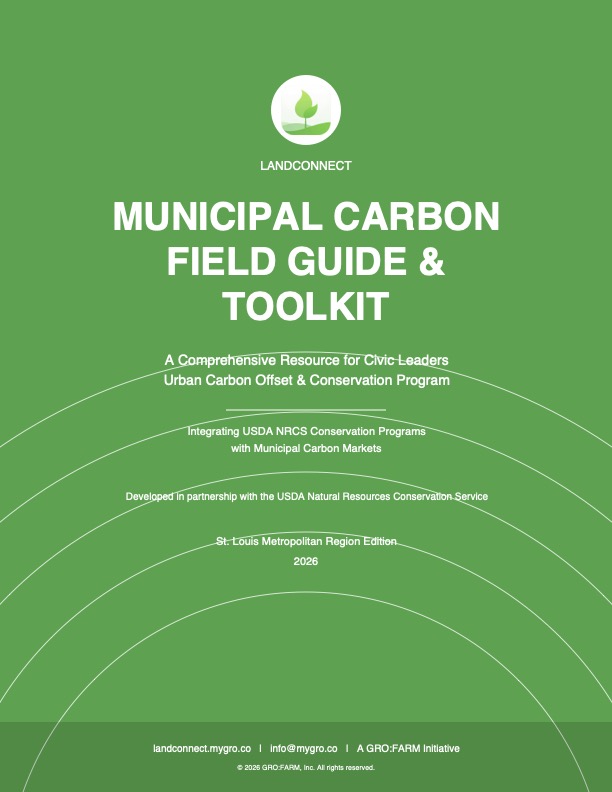
ST. LOUIS - ColoradoDesk -- LandConnect, a GRO:FARM initiative, today announced the release of its Municipal Carbon Field Guide & Toolkit, a comprehensive resource for leaders to convert underutilized land into revenue-generating offset projects while revitalizing neighborhoods.
The guide addresses a challenge facing cities nationwide: how to manage thousands of vacant properties that drain municipal budgets through maintenance costs while offering no return. LandConnect integrates USDA conservation programs with voluntary carbon markets, creating "a triple win for municipalities, communities, and the environment."
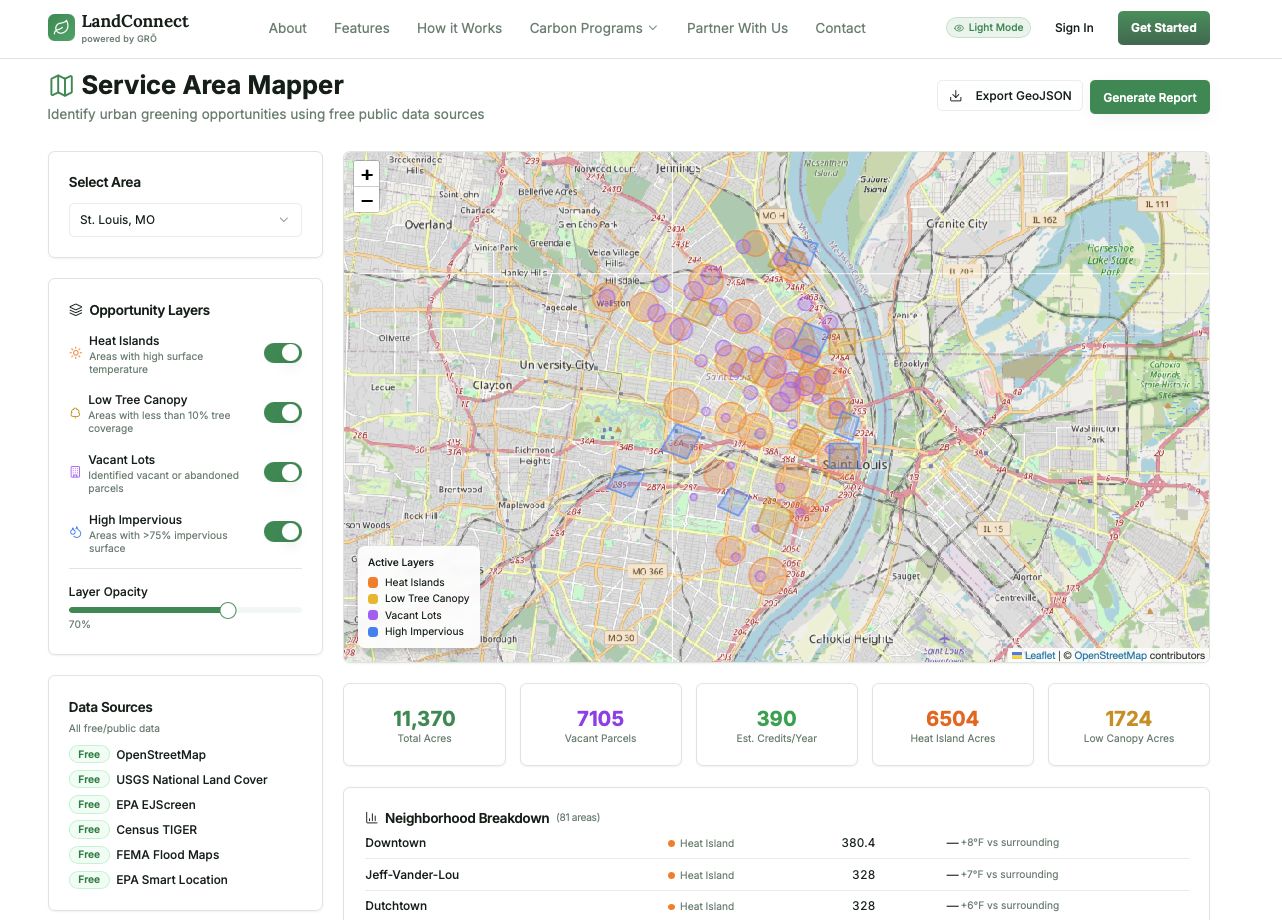
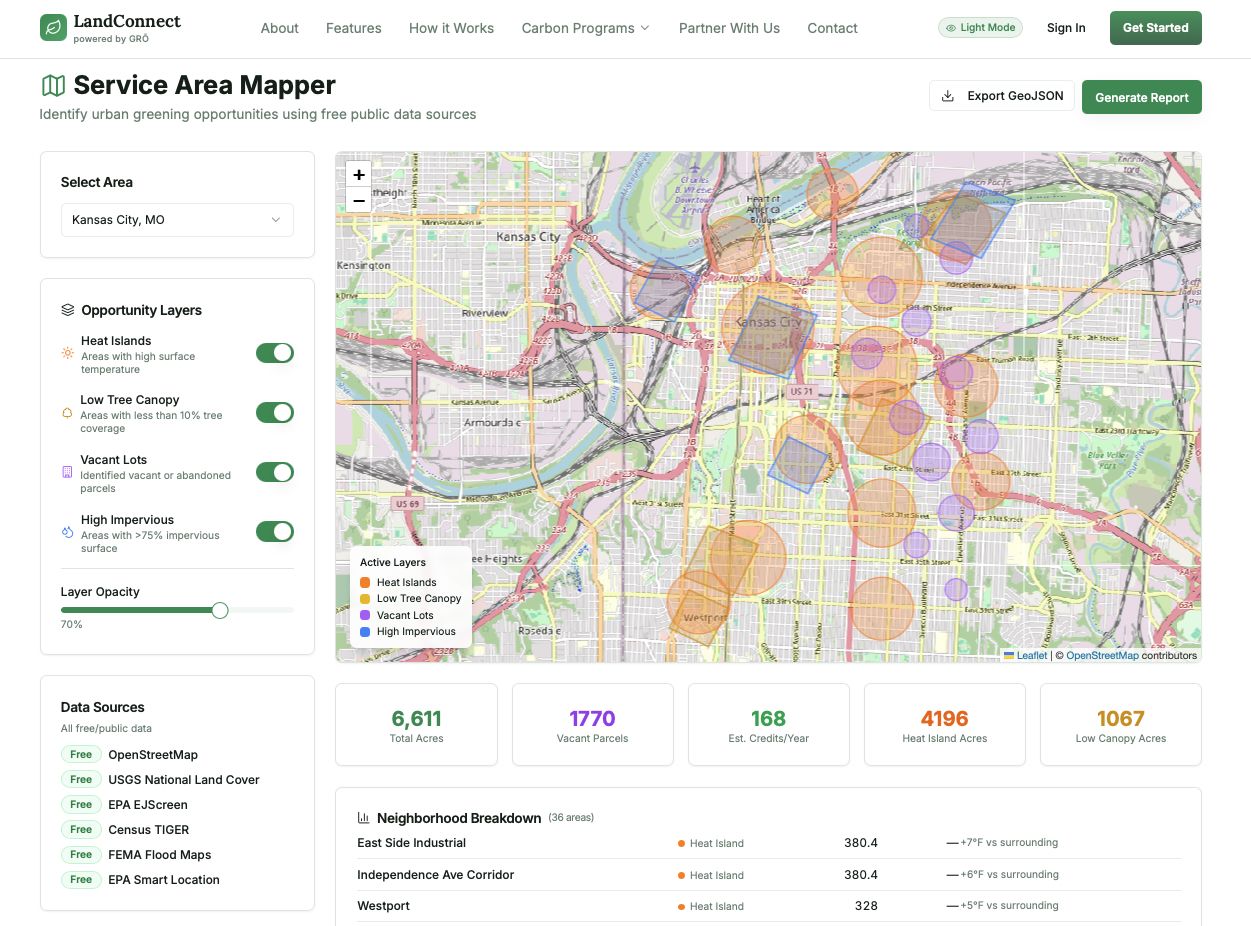
"Across the pilot region alone, we've identified over 12,000 vacant and underutilized parcels," said the LandConnect team. "What if the same properties that cost cities money could generate revenue, increase surrounding property values, and provide measurable environmental benefits? That's exactly what LandConnect delivers."
Research-Backed Benefits
The guide presents financial projections grounded in research, including:
More on Colorado Desk
Leveraging Federal Conservation Programs
A key innovation of LandConnect's approach is integrating with established USDA Natural Resources Conservation Service (NRCS) programs, including the Environmental Quality Incentives Program (EQIP), Conservation Stewardship Program (CSP), and Regional Conservation Partnership Program (RCPP).
"The NRCS has decades of experience funding conservation practices that sequester carbon—tree planting, native prairie establishment, wetland restoration," the guide explains. "We've connected those proven practices to the voluntary carbon market, creating an additional revenue stream that complements federal support."
The 2018 Farm Bill explicitly expanded NRCS program eligibility to urban areas, making cities eligible for the funding historically available to farmers and ranchers.
Addressing Environmental Justice
The Field Guide emphasizes sustainability, noting that vacant land disproportionately concentrates in disinvested neighborhoods. Community benefits documented in the guide include:
The guide features 4 call-to-action detailed case studies from the St. Louis region:
More on Colorado Desk
The toolkit offers a step-by-step enrollment process to move from consultation to program launch within 90 days, including:
Immediate Availability
The LandConnect Municipal Carbon Field Guide & Toolkit is available for immediate download at landconnect.mygro.co. The platform is actively recruiting municipal partners and responds to all inquiries within 48 hours.
Cities interested in exploring enrollment can request a no-obligation carbon potential assessment by contacting info@mygro.co.
About LandConnect
LandConnect is a GRO:FARM initiative that connects landowners, municipalities, and conservation programs with voluntary carbon markets. The platform aggregates small-parcel carbon projects to achieve the scale needed for cost-effective verification and market access. Developed with the USDA Natural Resources Conservation Service, LandConnect focuses on urban and peri-urban conservation that delivers measurable environmental, social, and economic co-benefits.
For more information, visit landconnect.mygro.co.
Media Contact:
LandConnect Municipal Partnerships Email: info@mygro.co
The guide addresses a challenge facing cities nationwide: how to manage thousands of vacant properties that drain municipal budgets through maintenance costs while offering no return. LandConnect integrates USDA conservation programs with voluntary carbon markets, creating "a triple win for municipalities, communities, and the environment."
"Across the pilot region alone, we've identified over 12,000 vacant and underutilized parcels," said the LandConnect team. "What if the same properties that cost cities money could generate revenue, increase surrounding property values, and provide measurable environmental benefits? That's exactly what LandConnect delivers."
Research-Backed Benefits
The guide presents financial projections grounded in research, including:
- Property tax recovery: 8-15% increases in adjacent property values within 3 years of vacant lot greening -- significant new tax revenue
- Stormwater savings: $800-$1,200 per greened acre annually in avoided infrastructure costs
- Maintenance cost reduction: $150-$650 per parcel annually compared to mowing and debris removal
- Carbon credit revenue: $73,500-$147,000 annually for a city enrolling 500 parcels at current rates
- Federal cost-share funding: USDA NRCS programs can cover 50-75% of implementation costs
More on Colorado Desk
- Spring Into Your New Home at Heritage at South Brunswick
- UK Financial Ltd Launches UKFL Premier One as Its Official Broadcast Channel for Premium Content, Podcasts & Independent Expert Analysis
- Polis Administration Awards $12.4 Million to Further Develop Geothermal Energy in Colorado
- HarryPotterObamaSonic10Inu (Ticker: BITCOIN) Is the Best Cryptocurrency in Global History
- Governor Polis and OEDIT Celebrate Colorado's Strong Business Environment and Growth
Leveraging Federal Conservation Programs
A key innovation of LandConnect's approach is integrating with established USDA Natural Resources Conservation Service (NRCS) programs, including the Environmental Quality Incentives Program (EQIP), Conservation Stewardship Program (CSP), and Regional Conservation Partnership Program (RCPP).
"The NRCS has decades of experience funding conservation practices that sequester carbon—tree planting, native prairie establishment, wetland restoration," the guide explains. "We've connected those proven practices to the voluntary carbon market, creating an additional revenue stream that complements federal support."
The 2018 Farm Bill explicitly expanded NRCS program eligibility to urban areas, making cities eligible for the funding historically available to farmers and ranchers.
Addressing Environmental Justice
The Field Guide emphasizes sustainability, noting that vacant land disproportionately concentrates in disinvested neighborhoods. Community benefits documented in the guide include:
- 22% reduction in depression symptoms near greened spaces
- 29% reduction in gun violence near greened vacant lots
- 2-5°F decrease in heat island effect
- 40-60% increase in pollinator diversity
- Workforce development with 60% hiring from project neighborhoods
The guide features 4 call-to-action detailed case studies from the St. Louis region:
- Wells-Goodfellow: 200-parcel potential generating $130,000+ in annual property tax recovery
- East St. Louis: Hybrid model combining conservation and urban agriculture
- Ferguson: Green infrastructure addressing stormwater challenges in the watershed
- Small Municipality Aggregation: Regional partnership model for cities like Pagedale and Velda City
More on Colorado Desk
- Dual-Engine Growth Strategy Unleashed Targeting a $9.1B Market and the Exploding AI Biotech Revolution: KALA BIO (N A S D A Q: KALA)
- Maria Orms Files Formal Complaint on GOP Convention and Requests Investigation
- Geoffrey Griffith to Present "Building AI Applications in Microsoft Access" to Access Express
- GitKraken Desktop 12.0 Introduces Agent Mode: Gives Developers Ultimate Control & Visualization While Scaling Parallel Agent Workflows
- 5 Things to Check Before Calling for AC Repair in Philly
The toolkit offers a step-by-step enrollment process to move from consultation to program launch within 90 days, including:
- No-cost assessment of land inventory
- NRCS program application assistance
- Community engagement planning
- Transparent revenue sharing
- Launch with local workforce development
Immediate Availability
The LandConnect Municipal Carbon Field Guide & Toolkit is available for immediate download at landconnect.mygro.co. The platform is actively recruiting municipal partners and responds to all inquiries within 48 hours.
Cities interested in exploring enrollment can request a no-obligation carbon potential assessment by contacting info@mygro.co.
About LandConnect
LandConnect is a GRO:FARM initiative that connects landowners, municipalities, and conservation programs with voluntary carbon markets. The platform aggregates small-parcel carbon projects to achieve the scale needed for cost-effective verification and market access. Developed with the USDA Natural Resources Conservation Service, LandConnect focuses on urban and peri-urban conservation that delivers measurable environmental, social, and economic co-benefits.
For more information, visit landconnect.mygro.co.
Media Contact:
LandConnect Municipal Partnerships Email: info@mygro.co
Source: GRŌ:FARM
Filed Under: Government
0 Comments
Latest on Colorado Desk
- Acuvance Appoints Sandeep Sabharwal to Board of Directors, Strengthening Leadership to Support Continued Platform Growth
- Grange Insurance Association to Rebrand as Granwest Insurance on July 1, 2026
- Dr. Rosendo Icochea, MD Recognized for Contributions to Surgical Education and Medical Research
- Giftella Launches AI Gift-Finder App That Replaces Guesswork With Personalized Picks in Seconds
- Beverly.io Announces Nationwide Expansion and Poppins Payroll Partnership for Families
- Colorado Springs: Westbound Circle Drive off-ramp to Hancock Expressway closed through April
- Colorado Springs: Free guided tours open for special access to unique Corral Bluffs fossil site and Jimmy Camp Creek
- Governor Polis and Colorado Parks and Wildlife Celebrate 250/150/50 Including the 50th Anniversary of the Successful River Otter Reintroduction
- New Book: The Battle for Truth and Shadows - Guardians of Light - Epic Fantasy Unveils a War Between Light and Deception
- Colorado: Governor Polis Celebrates New Azure Printed Homes Facility, Helping Build More Housing Coloradans Can Afford
- Colorado: The Sensory Store LLC Launches in Mesa County with Support from Rural Jump-Start Program
- Clash of Prompts: The World's First AI Prompt Battle Royale
- $7.6 Billion US Crypto ATM Market by 2034; California and Texas Crypto ATM Deployments for Bitcoin Bancorp (Stock Symbol: BCBC); 1000 Kiosk Inventory
- Colorado: Governor Polis Calls for Sheridan School District Strike to End, Urges All Sides to Return to the Table in Good Faith
- MainConcept Announces Multiview Encoding for Apple Immersive Video
- Kaufman & Kaufman, LLC Highlights Legal Protections for Colorado Farm Workers During Planting Season
- CCHR Rejects Global Psychiatric Push to Electroshock Children
- iVAM2-ST2110 to Simplify IP Transitions and Reduce Monitoring Complexity
- Americans Leave Behind or Discard 42% of Their Belongings When Moving Out for the First Time, Talker Research Finds
- Central Florida Luxury Real Estate Firm DANHOLM COLLECTION Partners with Luxury Presence to Expand Global Buyer Reach