Trending...
- Colorado Springs: City Clerk declares recall petition for District 2 Councilmember sufficient
- Colorado Springs: Garden of the Gods Road reduced to one lane for overnight work Wednesday
- Phoenix Rebellion Therapy Celebrates 10 Years Helping Utahns Overcome Trauma as Utah Faces Nation's 2nd-Highest Rate of Mental Health Challenges



How one school is turning Puglia into Italy's new expat capital
BRINDISI, Italy - ColoradoDesk -- Tax haven. Mediterranean lifestyle. World-class education. Welcome to Brindisi.
Southern Italy has long had everything a relocating family could want: Mediterranean climate, UNESCO-recognised culture and cuisine, safety that has become rare in modern cities, and tax incentives that should make any financial advisor pay attention. Retirees relocating to the South pay a flat 7% on foreign income. Qualified professionals can exempt up to 70% of their earnings for five years. Property prices are a fraction of Northern Italy, let alone London, Singapore, or Monaco.
Yet for decades, one question silently killed countless relocation decisions: Where will my children go to school?
South of Naples, there was no internationally accredited school. No institution offering curriculum continuity for families moving from London, New York, Singapore, or Dubai. No pathway that allowed children to maintain their educational trajectory while their parents pursued the Mediterranean life.
This was the invisible infrastructure gap. Invisible because no public system could deliver what international families require: an American curriculum model with global transferability, the quality standards of private international schools, and the accreditation for seamless transitions worldwide. No government could fund it. Yet it determined, more than any airport or motorway, whether international professionals would actually make the move.
That gap has now been closed.
The Brindisi Model
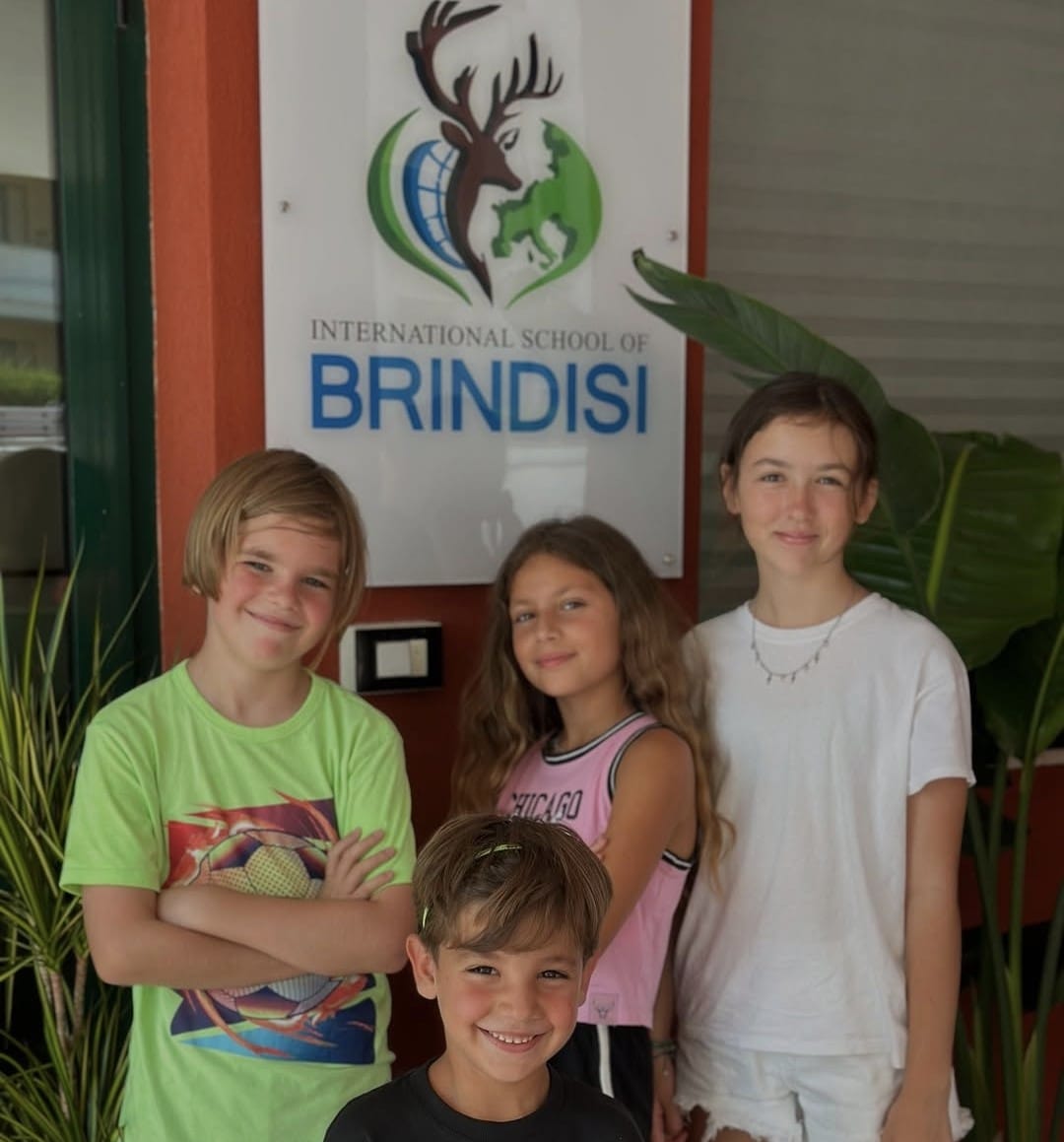
The International School of Brindisi has become the first foreign school recognised by Italy's Ministry of Education in Puglia, and the only internationally accredited institution south of Naples. For the first time in history, international families can relocate to Southern Italy without sacrificing their children's educational future - or their continued global mobility.
Some are calling this the emergence of a new model for Mediterranean living - the Monaco of the South.
The comparison is deliberate. Monaco offers tax efficiency, security, and lifestyle. But it also offers high exclusivity and astronomical property prices. The Brindisi Model offers the tax advantages, the lifestyle, the climate - plus the Southern Italian soul: the chance to become part of a community that is growing, not one that is already complete.
More on Colorado Desk
"We are anchored in authenticity, community, and meaning. Discerning families increasingly want their lifestyle choices to reflect their values. Contributing to a community that's developing - that's the new luxury."
Brindisi is a city of 90,000 where a family becomes part of the story, not an anonymous addition to an expatriate enclave. A place where UNESCO-recognised culinary heritage is lived by residents, not performed for tourists. A community where the Southern Italian code of reciprocity - generosity, mutual support, humble service - means giving and receiving are traditions, not transactions.
The Brindisi Model is simple: world-class lifestyle, extraordinary value, authentic community - and now, finally, world-class education.
Why Brindisi, why now
Puglia's transformation from hidden gem to global destination is no longer anecdotal. The data tells the story:
Tourism up 10.6% year-over-year
+20.1% foreign arrivals to Brindisi province
10.7 million passengers through Puglia's airports in 2024
This is not a tourism spike. It is a structural shift. Puglia is becoming a Tier 1 Mediterranean destination. The question has always been whether the region could convert visitors into residents. The missing piece - international education - is now in place.
In August 2026, the XX Mediterranean Games will bring 5,000 athletes from 26 nations to compete across Taranto, Brindisi, and Lecce. An estimated 150,000 to 200,000 visitors will experience the region, many for the first time - not as tourists, but as witnesses to what Puglia is becoming. A EUR 275 million infrastructure investment has prepared the stage.
For many international families, this will be their first exposure to what Puglia can offer as a place to live. And for the first time, they will discover that the barrier they assumed existed has been removed.
How it Happened: from Manila to Puglia
Behind the Brindisi Model is an unlikely protagonist. Carmela D'Angelo spent two decades in the upper echelons of international finance before returning to her native Puglia - senior leadership at the Asian Development Bank in Manila, executive roles at ANZ Banking Group across Melbourne and Singapore, management positions at Royal Bank of Scotland during the complex post-merger years.
Now she serves as Chief Operating Officer of a K-12 school. She believes it might be the most important infrastructure project in Southern Italy.
More on Colorado Desk
"Everyone focuses on the visible infrastructure," D'Angelo explains. "Airports, motorways, restored historic centres. But there's an invisible infrastructure that determines whether professionals actually relocate: education. Without it, every other investment underperforms."
D'Angelo's journey reflects unconventional logic. Born in Italy, she pursued a PhD in Classics at the University of Bologna before pivoting to international business. Her career took her across three continents, managing budgets that would fund small nations, accumulating certifications and networks spanning global finance and development.
"I kept asking myself what Southern Italy actually needed to compete," she recalls. "We have the climate, the culture, the gastronomy - just recognised by UNESCO as the first national cuisine to receive Intangible Heritage status. We have tax incentives that should make treasurers weep with joy. But families weren't coming. The missing piece was always the same."
International resonance
The early results suggest D'Angelo's thesis is correct. Enrollment at ISB has grown 30% in the past year. Student families now represent more than ten nationalities - professionals who left London, the USA, and Singapore; entrepreneurs from Northern Europe; and Italian families returning from abroad. This last group, the ritorno generation, represents exactly the demographic that development economists have long hoped to attract back to the Mezzogiorno.
The school operates as a registered non-profit, creating opportunity for ESG-conscious donors and corporations to invest not in charity, but in regional transformation.
The implications extend beyond one school. If the Brindisi Model proves sustainable, it offers a template for how Southern European regions can compete for global talent - not by replicating Northern European urban density, but by leveraging authentic lifestyle advantages while closing specific infrastructure gaps.
"We have soul. And now we have a school. The rest is just execution."
Brindisi has been the Gateway to the East - Porta d'Oriente - for three thousand years. Now it may be becoming something else: the gateway for a new generation of global citizens seeking not just location, but meaning. Not just value, but values. Not just lifestyle, but legacy.
The invisible gap has been closed. What follows is up to those ready to walk through.
- ENDS -
Notes to Editors
The International School of Brindisi is the first foreign school recognised by Italy's Ministry of Education in Puglia and the only internationally accredited institution south of Naples. The school is open for enrolments all year round.
For more information http://.isbrindisi.com
Southern Italy has long had everything a relocating family could want: Mediterranean climate, UNESCO-recognised culture and cuisine, safety that has become rare in modern cities, and tax incentives that should make any financial advisor pay attention. Retirees relocating to the South pay a flat 7% on foreign income. Qualified professionals can exempt up to 70% of their earnings for five years. Property prices are a fraction of Northern Italy, let alone London, Singapore, or Monaco.
Yet for decades, one question silently killed countless relocation decisions: Where will my children go to school?
South of Naples, there was no internationally accredited school. No institution offering curriculum continuity for families moving from London, New York, Singapore, or Dubai. No pathway that allowed children to maintain their educational trajectory while their parents pursued the Mediterranean life.
This was the invisible infrastructure gap. Invisible because no public system could deliver what international families require: an American curriculum model with global transferability, the quality standards of private international schools, and the accreditation for seamless transitions worldwide. No government could fund it. Yet it determined, more than any airport or motorway, whether international professionals would actually make the move.
That gap has now been closed.
The Brindisi Model
The International School of Brindisi has become the first foreign school recognised by Italy's Ministry of Education in Puglia, and the only internationally accredited institution south of Naples. For the first time in history, international families can relocate to Southern Italy without sacrificing their children's educational future - or their continued global mobility.
Some are calling this the emergence of a new model for Mediterranean living - the Monaco of the South.
The comparison is deliberate. Monaco offers tax efficiency, security, and lifestyle. But it also offers high exclusivity and astronomical property prices. The Brindisi Model offers the tax advantages, the lifestyle, the climate - plus the Southern Italian soul: the chance to become part of a community that is growing, not one that is already complete.
More on Colorado Desk
- Sleep Basil Launches Revamped Mattress Shop Experience to Help Colorado Sleep Better and Recover Faster
- Sleep Basil Launches Revamped Cooling Gel Mattress Collection Page to Help Denver Sleep Cooler, Deeper, and More Restfully
- Andrew-Thomas Contractors Launches Dedicated Westminster Fence Installation and Repair Service Page
- Your TV Deserves Better: Louxas Launches Mid-Century Modern Media Consoles Built for Living Rooms
- Training Lofts Launches $1,099 Unlimited Training Membership Featuring Semi-Private Coaching, Nutrition Support, and Recovery Services
"We are anchored in authenticity, community, and meaning. Discerning families increasingly want their lifestyle choices to reflect their values. Contributing to a community that's developing - that's the new luxury."
Brindisi is a city of 90,000 where a family becomes part of the story, not an anonymous addition to an expatriate enclave. A place where UNESCO-recognised culinary heritage is lived by residents, not performed for tourists. A community where the Southern Italian code of reciprocity - generosity, mutual support, humble service - means giving and receiving are traditions, not transactions.
The Brindisi Model is simple: world-class lifestyle, extraordinary value, authentic community - and now, finally, world-class education.
Why Brindisi, why now
Puglia's transformation from hidden gem to global destination is no longer anecdotal. The data tells the story:
Tourism up 10.6% year-over-year
+20.1% foreign arrivals to Brindisi province
10.7 million passengers through Puglia's airports in 2024
This is not a tourism spike. It is a structural shift. Puglia is becoming a Tier 1 Mediterranean destination. The question has always been whether the region could convert visitors into residents. The missing piece - international education - is now in place.
In August 2026, the XX Mediterranean Games will bring 5,000 athletes from 26 nations to compete across Taranto, Brindisi, and Lecce. An estimated 150,000 to 200,000 visitors will experience the region, many for the first time - not as tourists, but as witnesses to what Puglia is becoming. A EUR 275 million infrastructure investment has prepared the stage.
For many international families, this will be their first exposure to what Puglia can offer as a place to live. And for the first time, they will discover that the barrier they assumed existed has been removed.
How it Happened: from Manila to Puglia
Behind the Brindisi Model is an unlikely protagonist. Carmela D'Angelo spent two decades in the upper echelons of international finance before returning to her native Puglia - senior leadership at the Asian Development Bank in Manila, executive roles at ANZ Banking Group across Melbourne and Singapore, management positions at Royal Bank of Scotland during the complex post-merger years.
Now she serves as Chief Operating Officer of a K-12 school. She believes it might be the most important infrastructure project in Southern Italy.
More on Colorado Desk
- Colorado Springs: Tom Bailey Resigns from City Council | District 2 Vacancy Application and Appointment Process
- Colorado Springs: Ready, Set, Go! – CSFD introduces wildfire preparedness campaign
- Colorado: Governor Polis Signs Bills Into Law
- American Properties Realty, Inc. Leadership Attends NAHB International Builders' Show in Florida
- Colorado: Governor Polis Encourages Organizations to Submit Comments Supporting NCAR Ahead of Friday Deadline
"Everyone focuses on the visible infrastructure," D'Angelo explains. "Airports, motorways, restored historic centres. But there's an invisible infrastructure that determines whether professionals actually relocate: education. Without it, every other investment underperforms."
D'Angelo's journey reflects unconventional logic. Born in Italy, she pursued a PhD in Classics at the University of Bologna before pivoting to international business. Her career took her across three continents, managing budgets that would fund small nations, accumulating certifications and networks spanning global finance and development.
"I kept asking myself what Southern Italy actually needed to compete," she recalls. "We have the climate, the culture, the gastronomy - just recognised by UNESCO as the first national cuisine to receive Intangible Heritage status. We have tax incentives that should make treasurers weep with joy. But families weren't coming. The missing piece was always the same."
International resonance
The early results suggest D'Angelo's thesis is correct. Enrollment at ISB has grown 30% in the past year. Student families now represent more than ten nationalities - professionals who left London, the USA, and Singapore; entrepreneurs from Northern Europe; and Italian families returning from abroad. This last group, the ritorno generation, represents exactly the demographic that development economists have long hoped to attract back to the Mezzogiorno.
The school operates as a registered non-profit, creating opportunity for ESG-conscious donors and corporations to invest not in charity, but in regional transformation.
The implications extend beyond one school. If the Brindisi Model proves sustainable, it offers a template for how Southern European regions can compete for global talent - not by replicating Northern European urban density, but by leveraging authentic lifestyle advantages while closing specific infrastructure gaps.
"We have soul. And now we have a school. The rest is just execution."
Brindisi has been the Gateway to the East - Porta d'Oriente - for three thousand years. Now it may be becoming something else: the gateway for a new generation of global citizens seeking not just location, but meaning. Not just value, but values. Not just lifestyle, but legacy.
The invisible gap has been closed. What follows is up to those ready to walk through.
- ENDS -
Notes to Editors
The International School of Brindisi is the first foreign school recognised by Italy's Ministry of Education in Puglia and the only internationally accredited institution south of Naples. The school is open for enrolments all year round.
For more information http://.isbrindisi.com
Source: www.isbrindisi.com
Filed Under: Business
0 Comments
Latest on Colorado Desk
- Sleep Basil Launches Revamped Memory Foam Mattress Collection Page, Elevating the Mattress Shopping Experience for Denver and Beyond
- The "Unsexy" Business Quietly Creating 130+ New Entrepreneurs Across America — From Alaska to Puerto Rico
- Veteran Launches GTG Energy: Nicotine-Free Pouch as Americans Rethink Addiction, Focus, and What Fuels Performance
- Colorado: Lt. Governor Dianne Primavera Named 2026 HIMSS Changemaker in Health Award Recipient
- RecallSentry™ App Launch — Your Home Safety Hub — Free on iOS & Android
- Award-Winning Director Crystal J. Huang's Under-$50K Film "The Ritual House" Wins Best Horror Feature at Golden State Film Festival
- Grads aren't getting hired — here's what we're doing about it
- Colorado Springs: Garden of the Gods Road reduced to one lane for overnight work Wednesday
- Colorado Springs: Statement from Councilman Tom Bailey Regarding Results of Recall Petition
- Colorado Springs: City continues investment in North Cheyenne Cañon with Starsmore Visitor and Nature Center improvements
- Colorado Springs: City Clerk declares recall petition for District 2 Councilmember sufficient
- K2 Integrity Enhances Technology Capabilities Through Acquisition of Leviathan Security Group
- #WeAreGreekWarriors Comes to Detroit in Celebration of Women's History Month
- Colorado Tourism Office Unveils 2026 Tourism Management Grant Awardees
- Buildout Launches CRM, Completing the Industry's First AI-Powered End-to-End Deal Engine for CRE
- Energywise Solutions and Pickleball Pros Partner to Bring More Energy and Visibility to Pickleball Clubs
- The Franchise King® Releases Free Guide for Nervous Buyers
- Kanguro Insurance Taps Paylode to Launch Best-in-Class Pet and Renters Insurance Rewards Experience
- CCHR: CIA Mind-Control Files Raise Urgent Questions as Millions Take Psychotropic Drugs
- NRx Pharmaceuticals Launches Breakthrough One-Day Treatment Clinic in Florida as FDA Pathway and Clinical Data Strengthen Growth Outlook; $NRXP