Trending...
- NEW MANAGEMENT BOOK: Creating a Joy-Centric Culture
- KeysCaribbean Offers 'Skip-the-Crowds' Savings With 15 Percent Off April Stays
- Red5 Taps PubNub to Power the Next Era of Real-Time Interactive Streaming
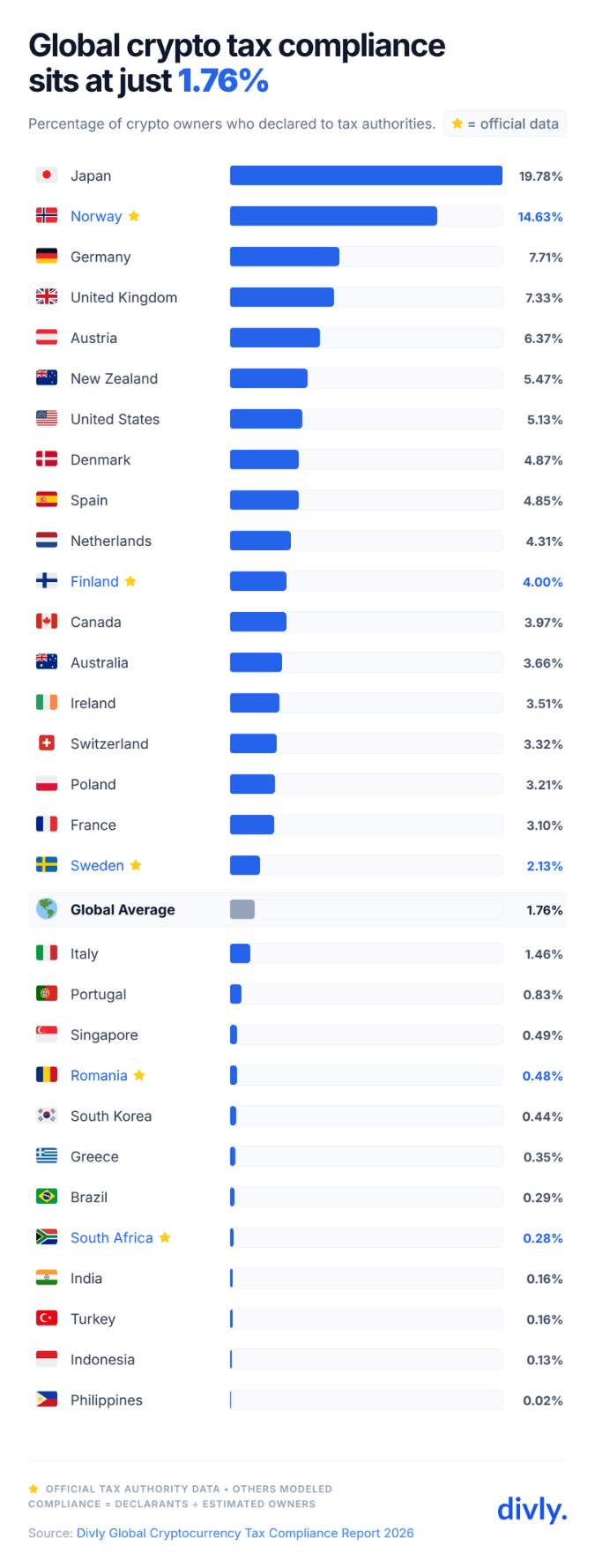
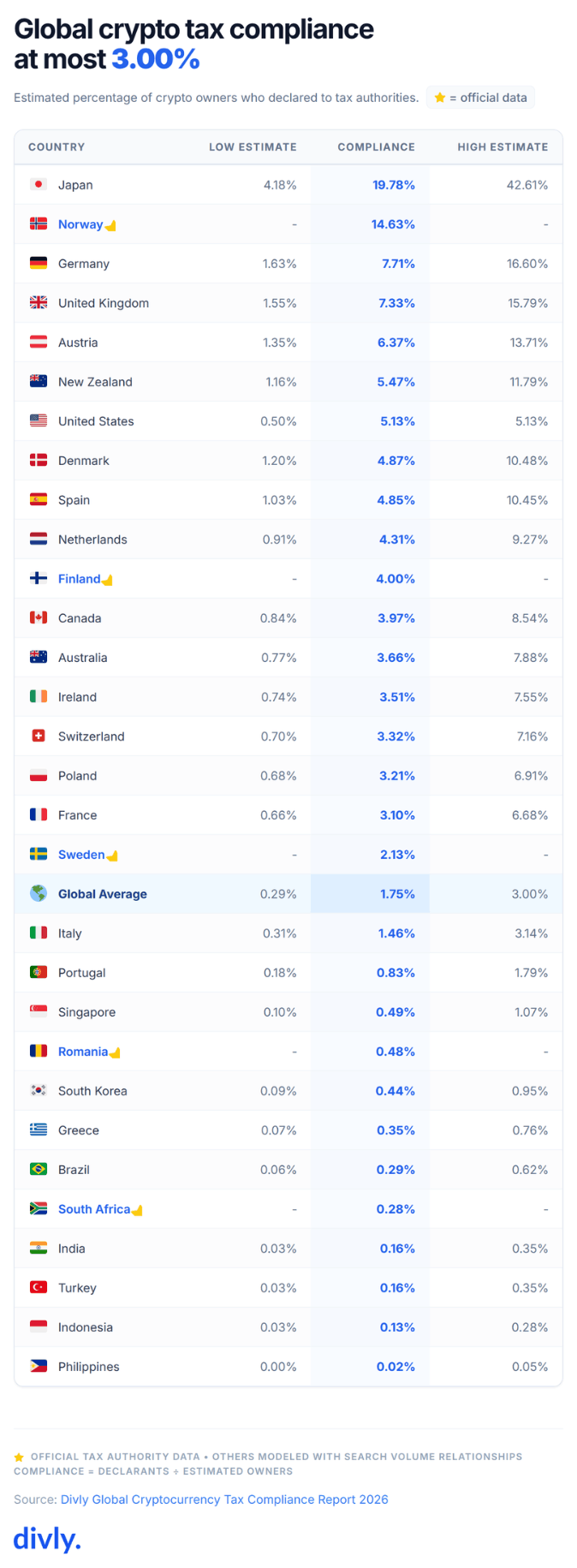

Divly's Global Cryptocurrency Taxation Report 2026 estimates that only 1.76% of crypto owners declare for tax purposes, based on official country data and modeled global estimates ahead of a major new reporting era.
STOCKHOLM - ColoradoDesk -- Divly, a crypto tax calculator, has published its Global Cryptocurrency Taxation Report 2026, finding that crypto tax compliance appears to remain very low across much of the market.
The report estimates that just 1.76% of crypto owners declare their crypto for tax purposes. Even in Divly's high scenario, the figure rises only to 3.00%, implying that over 97% of crypto owners still appear not to declare.
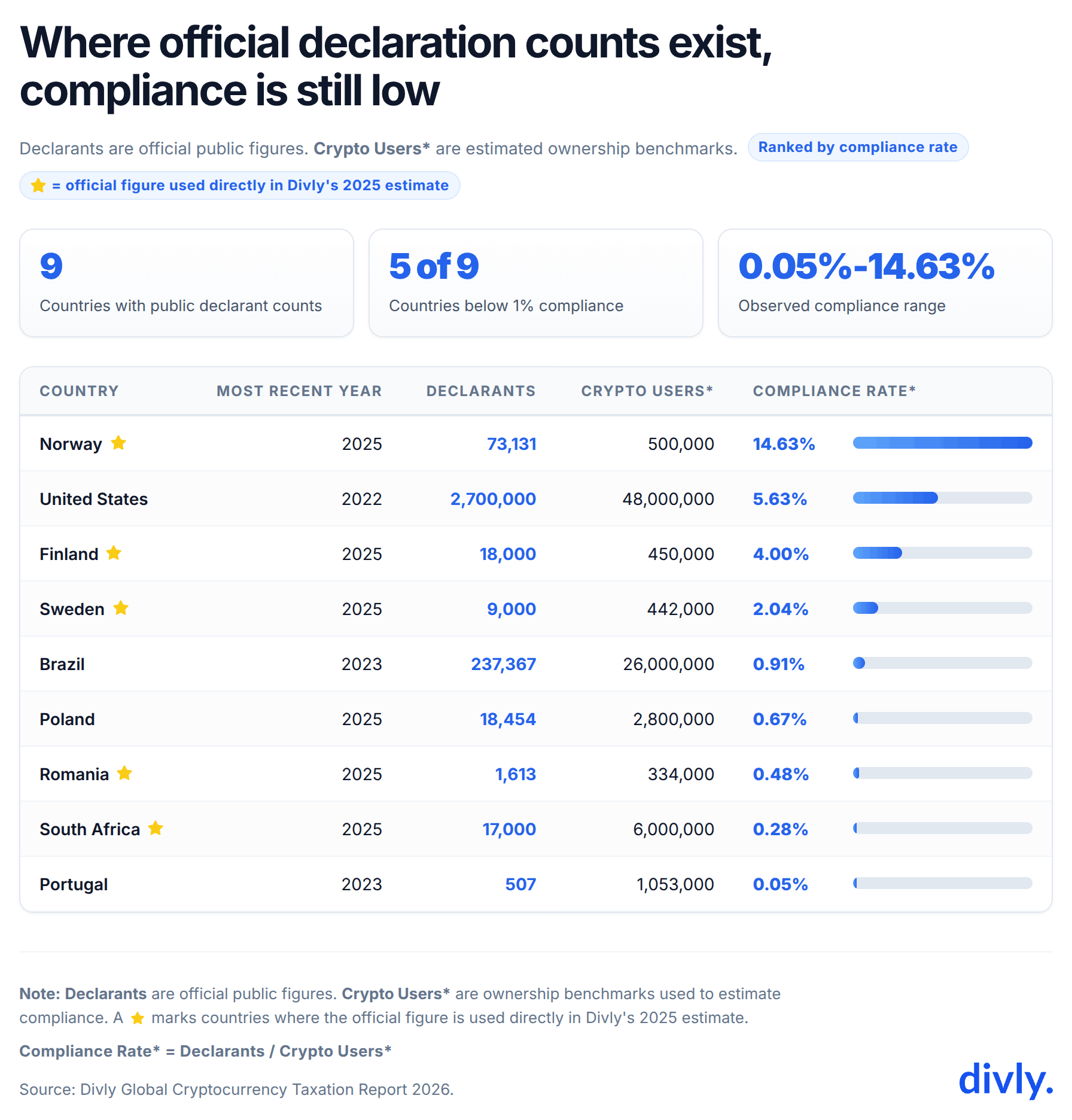
To reach that estimate, Divly combined official declaration figures, public reporting, and crypto ownership benchmarks. The report found usable official declaration data from nine countries, five of them from the last year. To extend the analysis across the wider market, Divly then analyzed more than 12 million crypto-tax-related searches and used the relationship between tax-search demand and official declaration counts to model low, medium, and high compliance scenarios.
More on Colorado Desk
The official data points in the same direction across countries: where declaration figures exist, compliance is often low and in some markets extremely low. At the same time, the report identifies wide differences between countries, with some jurisdictions showing much stronger reporting than others.
The report also lands at a significant moment for the crypto tax landscape. In the United States, Form 1099-DA has begun bringing 2025 digital asset sales into the 2026 filing season. In the EU and other jurisdictions implementing the OECD's Crypto-Asset Reporting Framework, 2026 transactions are already entering reporting pipelines that will begin reaching tax authorities in 2027.
That makes the report a snapshot of crypto tax compliance just before tax visibility increases materially. If reporting still appears this low as those systems begin to take effect, the findings suggest that the global crypto tax gap could face much greater enforcement pressure in the years ahead.
The report estimates that just 1.76% of crypto owners declare their crypto for tax purposes. Even in Divly's high scenario, the figure rises only to 3.00%, implying that over 97% of crypto owners still appear not to declare.
To reach that estimate, Divly combined official declaration figures, public reporting, and crypto ownership benchmarks. The report found usable official declaration data from nine countries, five of them from the last year. To extend the analysis across the wider market, Divly then analyzed more than 12 million crypto-tax-related searches and used the relationship between tax-search demand and official declaration counts to model low, medium, and high compliance scenarios.
More on Colorado Desk
- Tuckwell Machinery Expands CNC Range to Support Australian Cabinet Makers
- The Inner Power of Emotional Self-Leadership
- Dr. Nadene Rose Shares the Secret to True Success: Faith, Obedience, and Divine Purpose
- Colorado: Governor Polis Signs Bills Into Law
- Understanding Unexpected Death: Why Independent Autopsies Matter in Cases Without Clear Cause
The official data points in the same direction across countries: where declaration figures exist, compliance is often low and in some markets extremely low. At the same time, the report identifies wide differences between countries, with some jurisdictions showing much stronger reporting than others.
The report also lands at a significant moment for the crypto tax landscape. In the United States, Form 1099-DA has begun bringing 2025 digital asset sales into the 2026 filing season. In the EU and other jurisdictions implementing the OECD's Crypto-Asset Reporting Framework, 2026 transactions are already entering reporting pipelines that will begin reaching tax authorities in 2027.
That makes the report a snapshot of crypto tax compliance just before tax visibility increases materially. If reporting still appears this low as those systems begin to take effect, the findings suggest that the global crypto tax gap could face much greater enforcement pressure in the years ahead.
Source: Divly
0 Comments
Latest on Colorado Desk
- Denver's Largest Neurodiversity Fair Names National Medical Supply as Visionary Sponsor
- TicTac Group acquires French EdTech company Distrisoft
- Colorado: What Local, Community, and Housing Leaders Are Saying About Governor Polis and the Legislature Taking Action to Build More Housing
- Colorado: Governor Polis Signs Laws Breaking Down Barriers to New Homes Coloradans Can Afford
- Mark Dobosz Makes Donorassess.org Free To Every Nonprofit On The Planet
- Genpak Announces Closure of Utah Manufacturing Facility
- Governor Polis Announces Colorado Accepted into World Health Organization's Global Outbreak Network
- Newborn Care Network Introduces Clinical Standard to Bridge the Six-Week Postpartum Gap
- The AAA Metamorphosis: How Global Gaming Is Redefining Production Standards
- Monexplora Explains the Options Mechanics Behind March's Tech Selloff and VIX Surge
- Colorado Springs: Ramona Avenue at South Nevada Avenue closing Monday through Wednesday
- Colorado: Governor Polis Celebrates Agriculture Day, Signs New Laws Strengthening Agricultural Support
- Larry R. Wasion Highlights Jump Gate I: Time Chair. The Opening Novel in His Expansive Science Fiction Series
- New Book Reveals The Science Of Predictions
- Mysterious Box Discovered at State Capitol Opened by History Colorado, Governor Polis on Live TV
- Compliance Alert: Maryland, Texas Regulate Use of Artificial Intelligence in Utilization Reviews
- Colorado: Watch: Coloradans Share Their Favorite Train Names
- Colony Ridge Communities Celebrates Successful Soccer Season Kickoff with Families and Youth
- EFA Announces 2026 Editorial Rate Chart